


Table of content
- What Should You Inspect Before Selling Your House in Concord?
- What Disclosures Are Required When Selling a Home in Concord, CA?
- How Should You Stage and Photograph Your Concord Home?
- How Do You Price Your Concord Home to Sell - Not Sit?
- When Is the Best Time to List in Concord, CA?
- What Are the Costs of Selling a Home in Concord, CA?
- How the Renée White Team Helps Concord Sellers
- Selling Your House in Concord: The Steps That Make the Difference
- Frequently Asked Questions
KEY TAKEAWAYS
- A pre-listing inspection shows you what a buyer’s inspector will find, while you still have time to fix it or price around it.
- California sets disclosure requirements for sellers of one-to-four-unit homes, and incomplete paperwork is a common source of delays.
- Research from the National Association of REALTORS® shows staging influences how buyers respond and how quickly homes sell.
- Pricing deserves the same planning as repairs, where you start shapes every offer that follows.
- The Renée White Team has helped Contra Costa County sellers prepare and list homes for more than 21 years, and a free strategy call is the fastest way to know where to start.
Selling your house in Concord starts well before the sign goes in the yard. Buyers compare your home with every other listing in minutes, and a few avoidable surprises can cost you weeks of negotiating leverage: an inspection issue no one flagged, a disclosure form rushed through, or a list price set a little too hopefully. Most of what separates a smooth sale from a stressful one is in your hands.
The Renée White Team has helped Contra Costa County homeowners sell for more than 21 years. Sellers who prepare in the right order sell on their own terms. This guide walks through that order: inspections, disclosures, staging, and pricing, using California law and research from national housing organizations rather than guesswork.

What Should You Inspect Before Selling Your House in Concord?
Why a Pre-Listing Inspection Matters
Start with a pre-listing home inspection, the same kind a buyer would order after accepting your offer. The difference is timing. When you learn about a failing water heater or a roof problem in week one, you decide what to do about it. When a buyer’s inspector reports it in week four, the buyer decides.
Ask the inspector to cover the big systems: roof, heating and cooling, plumbing, electrical, water heater, foundation, and drainage. Older homes tend to show their age there first.
The U.S. Census Bureau’s American Community Survey reports a median value of owner-occupied homes in Concord of $797,600 for 2020–2024. That is what owners estimate their homes are worth, not an appraisal, but it shows the scale. A 1 percent concession on an $800,000 sale is $8,000. An unexpected inspection finding is exactly the kind of thing that prompts a buyer to ask for one.
Which Repairs Are Worth Making – and Which Aren’t?
Fix what a buyer would flag as a safety issue, a functional problem, or a warning sign:
- Leaking faucets and plumbing drips
- Broken windows or damaged screens
- Missing or non-functional smoke and carbon monoxide detectors
- Stained ceilings that point to past or active leaks
- Fresh neutral interior paint where needed
- Updated cabinet hardware and brighter light fixtures
- Tidy yard and trimmed landscaping
Large renovations are a different question. A full kitchen remodel rarely makes sense right before a sale, as you carry the cost and the timeline while buyers may still want to put their own stamp on the space. Over-improving for the neighborhood is a common mistake. The team’s guide on what to fix before selling a house in Contra Costa County goes deeper on which projects earn their keep.
Should You Fix Everything Before Listing?
No. Focus on items that will show up on a buyer’s inspection and give them negotiating leverage. For bigger issues, disclosing the condition and pricing accordingly often makes more sense than fixing it. A good agent will help you compare the cost of a repair against the cost of a likely credit.
What Disclosures Are Required When Selling a Home in Concord, CA?
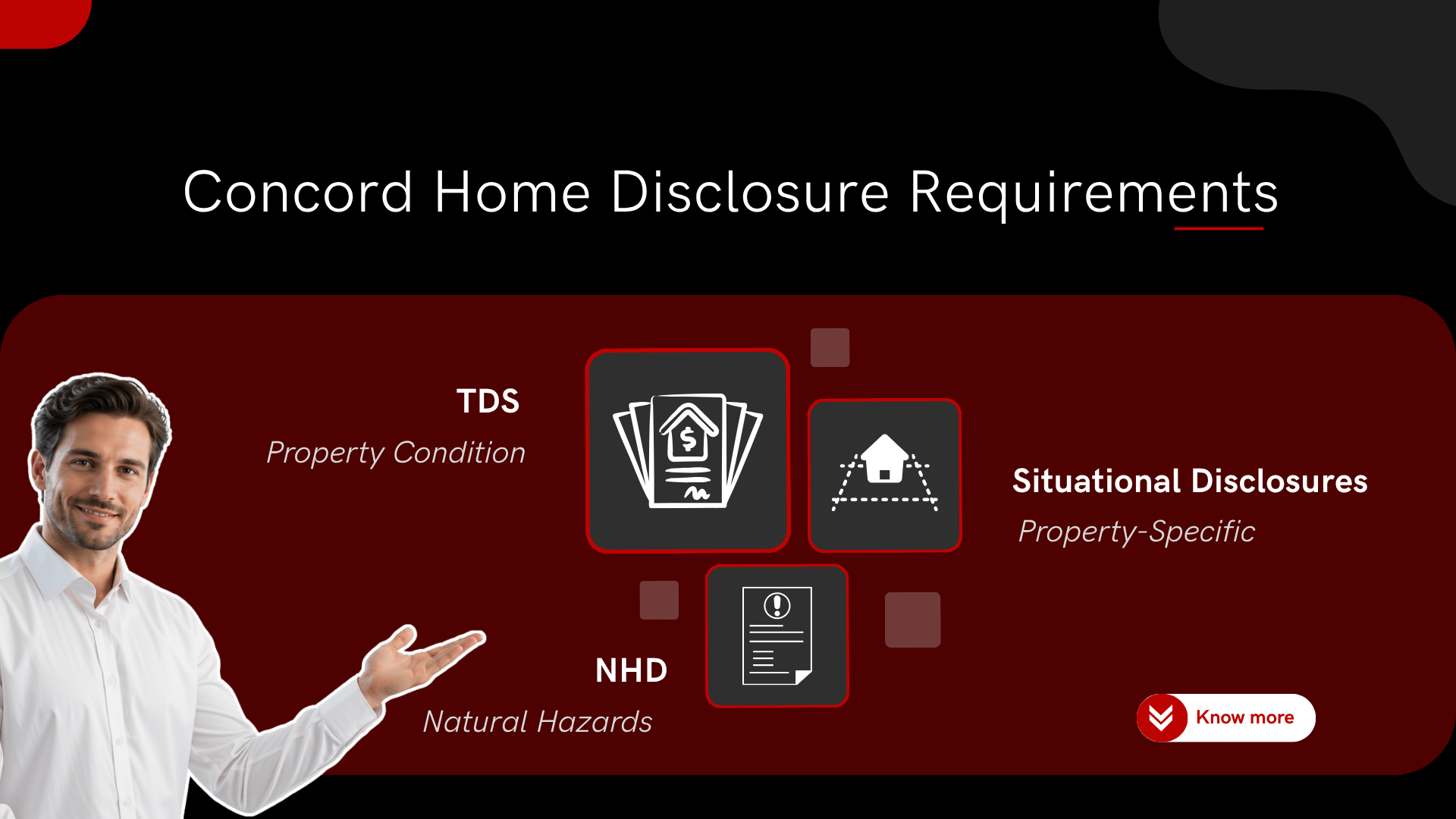
California puts real weight on seller disclosure, and for good reason: buyers cannot see what you know about the house. The California Department of Real Estate’s guide to disclosures in real property transactions lists what sellers of one-to-four-unit residential properties must provide.
Real Estate Transfer Disclosure Statement (TDS)
The TDS describes the condition of the property as you know it: the home’s systems, any defects, and its history. Completing it carefully before you list means fewer surprises once a buyer’s inspector gets involved.
Natural Hazards Disclosure Statement (NHD)
The NHD tells the buyer whether the home sits in a flood zone, fire hazard zone, earthquake fault zone, or similar area. A third-party NHD provider prepares this report, and your agent will order it as part of the disclosure package.
Situational Disclosures
The DRE guide lists disclosures that apply based on your specific property:
- Mello-Roos special taxes and bonds, if they affect your property
- Lead-based paint hazards for homes built before 1978
- Earthquake safety guidance for homes built before 1960
- Industrial-use and other nuisance notices, where relevant
Your listing agent and escrow officer will put the package together. Completing it before you list is far less disruptive than doing it during a buyer’s contingency period. If your home is in a homeowners association, request those documents early, as they can take time to arrive.
Do You Need to Disclose Permit History in California?
If you know about work done without a permit, raise it with your agent before the listing goes live. Unpermitted additions and conversions are one of the surprises that can derail a sale, because they often lead to price renegotiation or closing delays. Review your records with the City of Concord’s permit records page to see what is on file, then compare it against improvements you or previous owners made.
How Should You Stage and Photograph Your Concord Home?
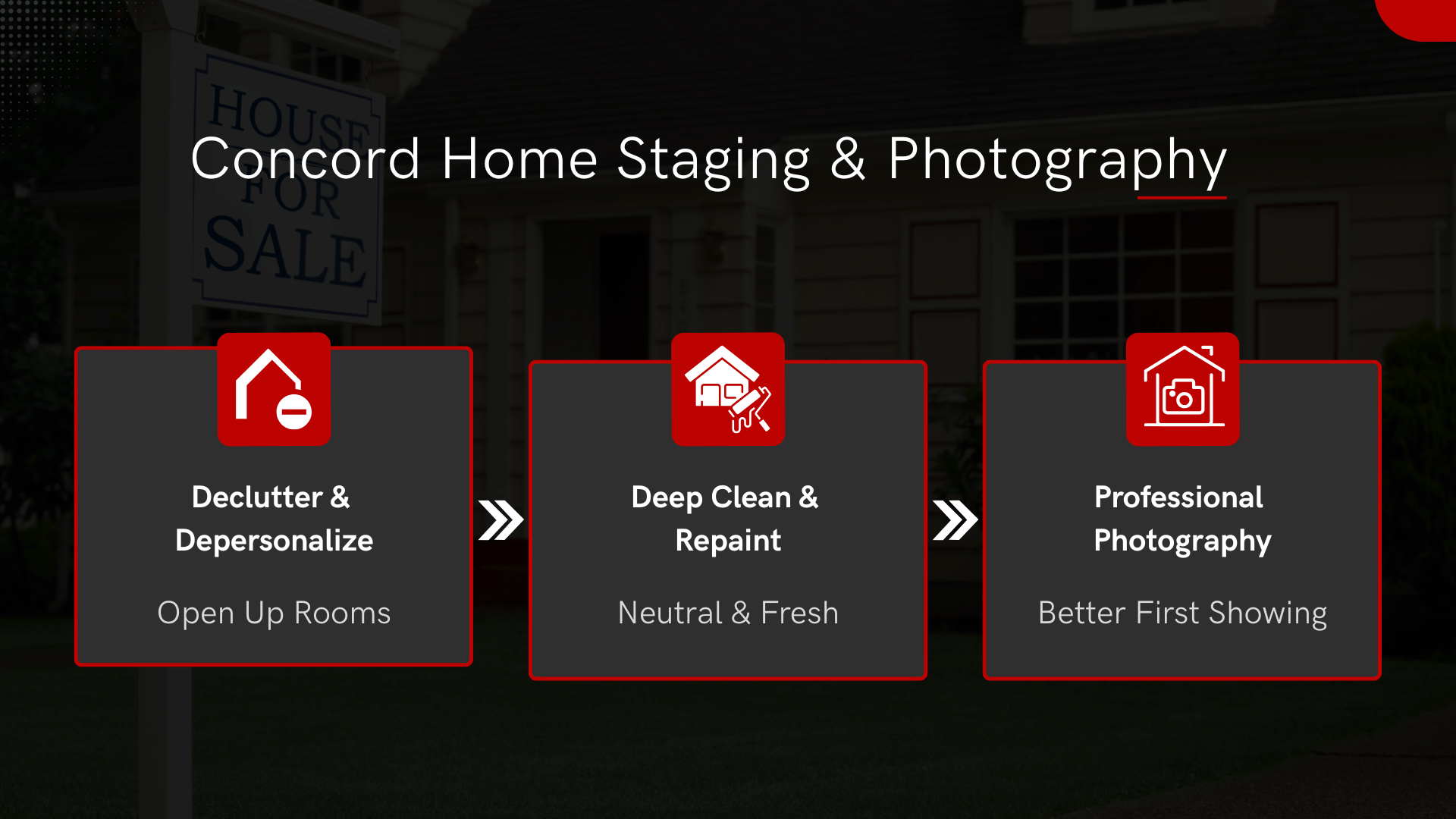
Buyers often see your home online first. The photos are your first showing, and staging is how you make sure that showing works.
The National Association of REALTORS® surveyed agents for its 2025 Profile of Home Staging. Of sellers’ agents who responded, 49 percent said staging cut the time a home spent on the market, and 29 percent said it increased the dollar value offered by 1 to 10 percent. The survey drew 1,266 responses and reflects agent perceptions, not a controlled study, so treat the figures as directional.
Buyers focus most on the living room (37 percent of respondents named it most important), the primary bedroom (34 percent), and the kitchen (23 percent). If your budget is limited, start there.
Before the photographer arrives:
- Remove personal items and thin out furniture so rooms feel open
- Deep clean, including windows and baseboards
- Repaint bold colors in a neutral tone
Hire a professional photographer. Phone photos do not do the same work as a first showing for every online buyer.
What Curb Appeal Updates Give You the Best Return in Concord?
Buyers form an opinion before they step inside. Pressure-wash the walkways, trim shrubs, replace worn house numbers, refresh the front door, and keep the landscaping tidy. These jobs cost little and signal that the whole house has been cared for.

How Do You Price Your Concord Home to Sell – Not Sit?
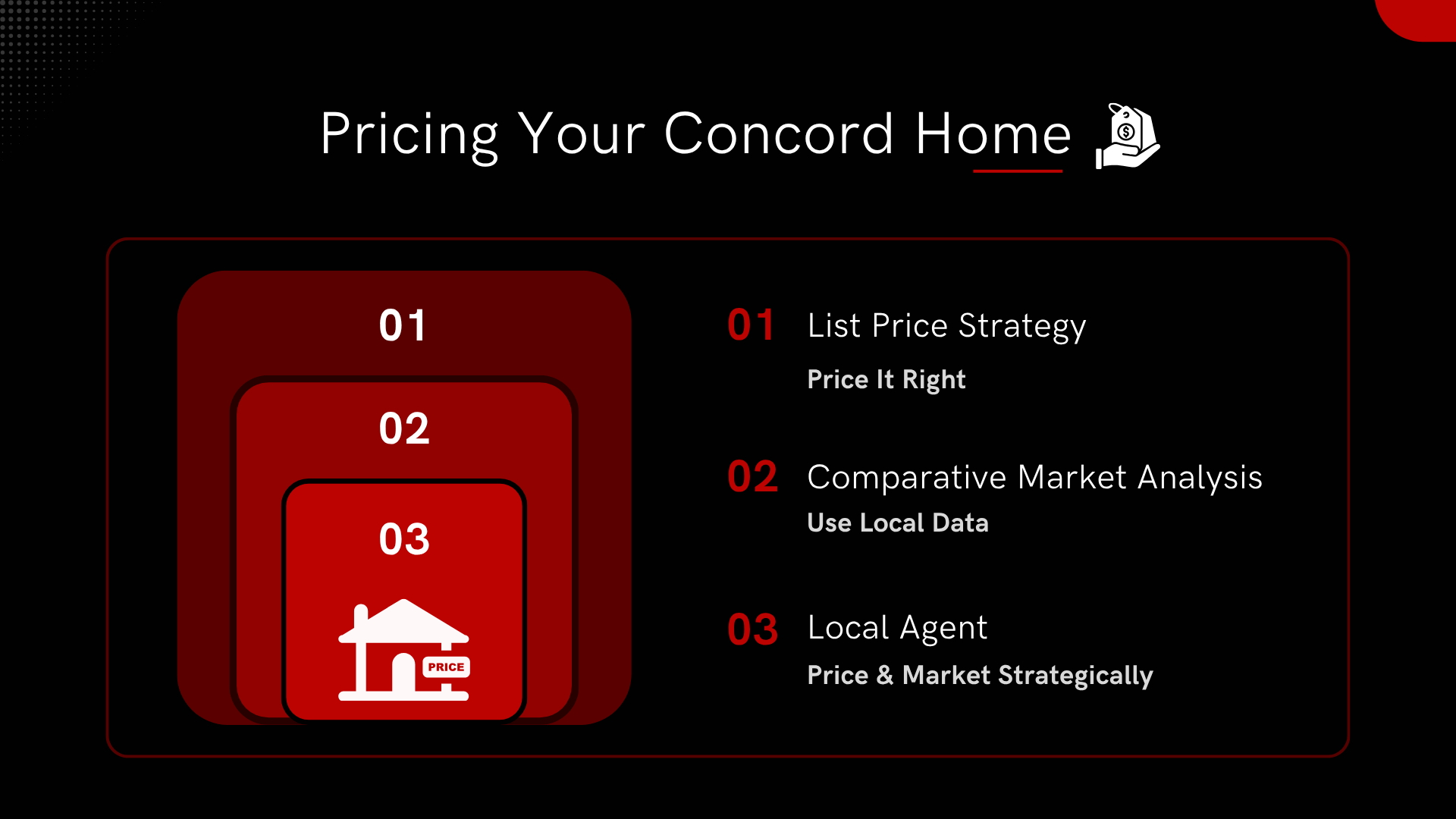
List Price Strategy
Pricing is where preparation either pays off or gets undone. Price too high, and the listing collects views without offers. Then the price cut tells buyers something is wrong. Price it right, and your home draws serious attention in its first days on the market.
Comparative Market Analysis vs. Online Estimates
Online estimates can be a useful starting point, but they cannot account for your updated bathroom or your new roof. A comparative market analysis from a local agent looks at recent nearby sales of similar homes, then adjusts for condition, upgrades, and current demand.
For context, the Federal Housing Finance Agency reported that house prices rose 3.26 percent on average between the third quarters of 2024 and 2025. That is a national figure, and Concord’s trend may differ, which is exactly why local data matters.
Working With a Local Agent
NAR’s 2025 Profile of Home Buyers and Sellers found that 91 percent of sellers used a real estate agent. Sellers’ top priorities in choosing one: marketing the home, pricing it competitively, and selling within a specific timeframe. For reference, the Renée White Team reports an average of 23 days on market across its listings.
When Is the Best Time to List in Concord, CA?
Seasonal patterns shift year to year, so ask your agent to show you recent local data rather than relying on rules of thumb. A well-prepared, well-priced home can compete in any season. Timing matters most when it lines up with your own plans: your next purchase, your move date, and the work you need to finish first. The team’s guide on when to sell a house in Concord looks at this in more detail.
What Are the Costs of Selling a Home in Concord, CA?
Know your net proceeds before you list, not after you get an offer. Here is what to account for.
Agent Compensation
NAR states that compensation is negotiable and not set by law. Talk through it openly with any agent before you sign an agreement.
Transfer Taxes
Concord’s municipal code sets a real property transfer tax of $0.275 for each $500 of consideration; on an $800,000 sale, that is $440. The county levies its own documentary transfer tax on top of that, so ask your escrow officer for the combined figure.
Title and Escrow Fees
These vary by company and sale price. Your escrow officer can give you an estimate once you have a purchase price in mind.
Staging
NAR’s 2025 staging report puts the median cost of professional staging at $1,500, and $500 when the listing agent handles it.
Repairs and Credits
Account for pre-listing repairs, plus any credits you agree to after the buyer’s inspection. These vary widely depending on what the inspection surfaces.
Ask your agent for a net proceeds worksheet. The team’s guides on the cost of selling a house in California and who pays what in Contra Costa County give a fuller breakdown. If you are also planning to buy, the companion guide on the cost to buy a home in Concord helps you plan both sides of the move.
How the Renée White Team Helps Concord Sellers
- Pre-sale strategy session: A walkthrough of your home, your timeline, and your goals, before you commit to anything.
- Pricing backed by local data: A comparative market analysis based on recent Concord sales, not national averages or automated estimates.
- Disclosure guidance: Help assembling and reviewing California’s required disclosure package so nothing gets missed before you list.
- Staging and presentation advice: Specific recommendations for your home and your budget, focused on what Concord buyers respond to.
- 21+ years in Contra Costa County: The team has closed transactions across every market cycle in this area and averages 23 days on market across its listings.
Selling Your House in Concord: The Steps That Make the Difference
Selling your house in Concord follows a sequence: inspect, repair what matters, complete your disclosures, stage and photograph, then price with local data. Each step protects the next one, and each is easier when you start early. You cannot control the market, but preparation is the one variable that is yours. When you are ready to talk through your plan, the Renée White Team is glad to walk through it with you.