


Table of content
- How Do You Set the Right Rental Price in California?
- How Should You Prepare Your Property Before Renting It Out?
- How Do You Screen Tenants in California?
- What Should a California Lease Agreement Include?
- What Are the Key California Landlord-Tenant Laws You Need to Know?
- Should You Self-Manage or Hire a Property Management Company?
- How Does Renting Out Your House Affect Your Taxes?
- Is Renting Out Your House in California Worth It?
- How Can the Renée White Team Help You Decide Whether to Rent or Sell?
- Frequently Asked Questions
KEY TAKEWAYS
- California law caps security deposits at one month’s rent for unfurnished units (effective July 1, 2024).
- AB 1482 limits rent increases to 5% plus local CPI for most residential properties.
- Landlords must give tenants 24 hours’ written notice before entering the property.
- Tenant screening fees are capped by California Civil Code and adjusted annually by CPI.
- Self-managing versus hiring a property manager is a real tradeoff that depends on time, distance, and experience; the Renée White Team can help you weigh both options for your specific property.
If you’re figuring out how to rent my house in California, the first thing to know is that this state has more landlord rules than most. That’s not a dealbreaker. Plenty of homeowners in Walnut Creek, Concord, and Danville rent out their properties profitably every year. The ones who do it well just went in knowing what they were getting into.
Renting out your property generates reliable monthly income, builds long-term equity, and gives you options if you are not ready to sell. At the same time, California’s tenant protection laws, rent control statutes, and required disclosures create real legal obligations. This guide walks through each stage of the process so you can move forward without surprises, whether you are new to being a landlord or you’ve done it before.
How Do You Set the Right Rental Price in California?

Pricing your rental accurately is the first practical decision you’ll make. Set it too high, and the property sits vacant, costing you more than a lower rent would. Set it too low, and you leave money on the table every month.
Step 1: Run a Comparable Rental Analysis
Understanding the local rental market starts with looking at what similar properties are actually renting for right now. Find active listings in your neighborhood with a matching bedroom count, square footage, and amenity profile. In competitive markets like Walnut Creek, small differences in location and condition can move the price significantly. A three-bedroom home near BART commands a different rate than one without transit access, even on the same street. You can get a sense of current inventory and demand by reviewing homes currently listed in Walnut Creek and comparable Contra Costa cities.
Step 2: Calculate Your Carrying Costs
Factor in your mortgage, property taxes, insurance, and HOA fees if applicable. The Contra Costa County property tax rate runs approximately 1.1% of assessed value annually, a fixed cost regardless of what rent you collect.
Step 3: Set a Price That Covers Your Costs and Leaves Room to Breathe
Your rental price needs to cover all carrying costs, with enough left over for the occasional vacancy or unexpected repair. Underpricing reduces your financial risk buffer; overpricing extends vacancy. If the local market rate barely breaks even for your property, that is worth knowing before you list, not after a tenant moves in.

How Should You Prepare Your Property Before Renting It Out?
Getting your property rent-ready is about more than curb appeal. California requires every landlord to keep their rental safe and livable. No broken heating, no structural hazards, no conditions that endanger health. Before you list, walk the property as a tenant would and run through this checklist:
- Deferred maintenance: Fix leaking fixtures, faulty electrical outlets, HVAC systems that need servicing, and any pest activity before showing the unit.
- Safety devices: Test and replace smoke detectors and carbon monoxide detectors. California law requires both in all residential rental units.
- Locks and security: Confirm all exterior doors and windows lock properly. Replace or rekey locks from the previous occupant.
- Cosmetic condition: Fresh paint, professionally cleaned carpets, and updated fixtures attract quality tenants and reduce vacancy time. Professional photography for your listing is also worth the cost. First impressions on rental platforms decide whether a prospective tenant clicks through or moves on.
- Landlord insurance: Standard homeowner’s policies typically exclude coverage once a property is rented. You’ll need a landlord policy or dwelling fire policy in place before your first tenant moves in.
How Do You Screen Tenants in California?
Tenant screening is where a lot of first-time landlords get into trouble. Some rush it out of urgency. Others apply criteria that cross fair housing lines without realizing it. Both are avoidable.
Federal law under the Fair Housing Act and California’s fair housing laws under the Fair Employment and Housing Act (FEHA) prohibit discrimination based on race, color, religion, sex, national origin, familial status, disability, sexual orientation, gender identity, marital status, or source of income. California’s source of income protections are particularly broad: you cannot reject a qualified tenant solely because they use a housing voucher. You are also required to provide reasonable accommodations for tenants with disabilities, and you cannot refuse to rent to someone because they have a service animal.
A thorough screening process applied consistently is your best protection. Pull a credit report, verify rental history, confirm income at roughly 2.5 to 3 times the monthly rent, and contact previous landlords directly. Apply the same written criteria to every prospective tenant.
California caps the tenant screening fee under Civil Code Section 1950.6. In 2026, the cap is approximately $65.86 per applicant, adjusted annually by CPI. You must provide a written receipt and return any unused portion if you choose not to rent to that applicant.
What Should a California Lease Agreement Include?
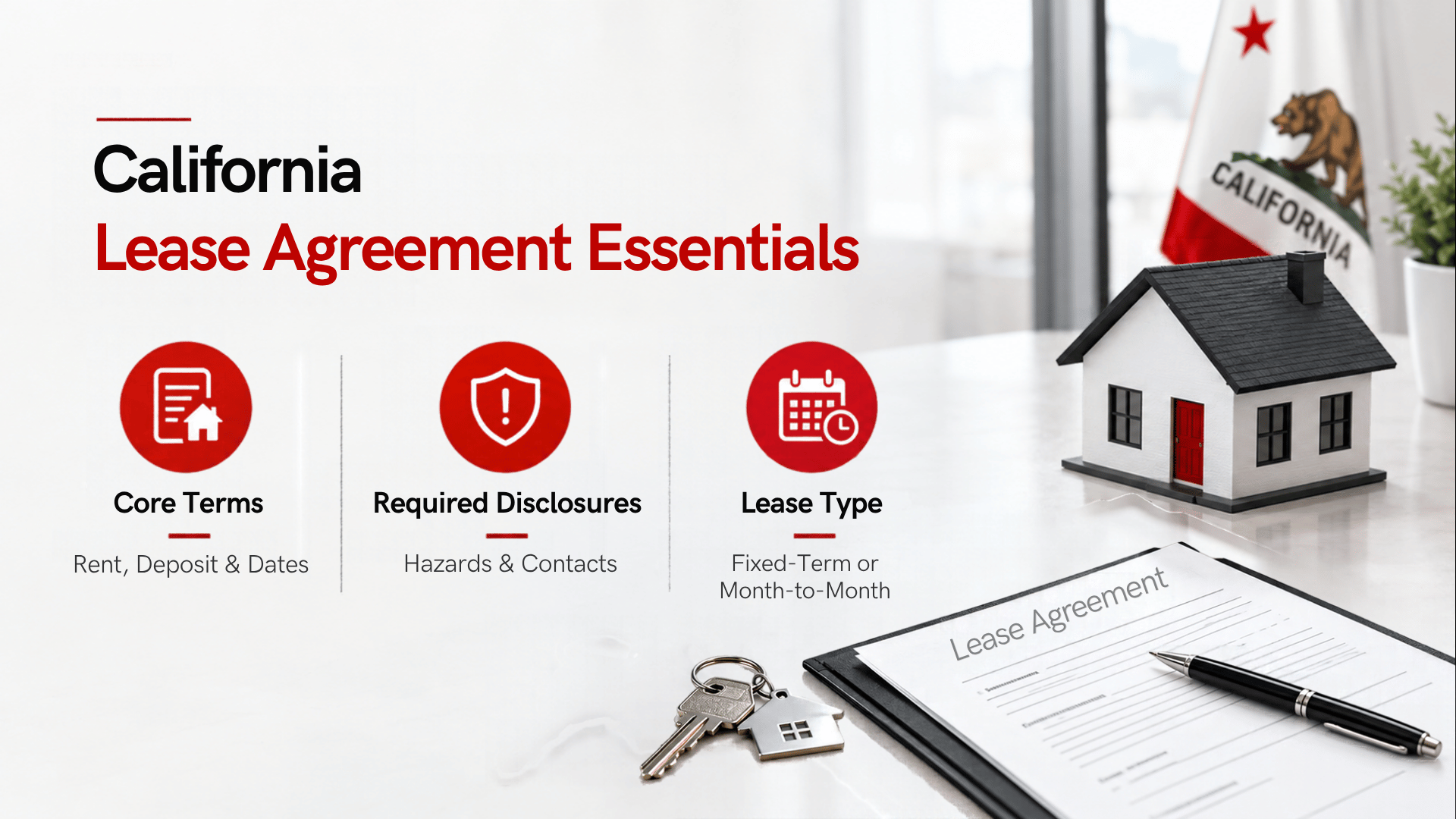
A professionally drafted lease agreement is essential for every California rental, regardless of whether you are renting month-to-month or on a fixed term. Verbal agreements are legally enforceable in California but nearly impossible to prove when disputes arise. Knowing the rental requirements upfront and putting them in writing is how you protect yourself from day one.
Core Lease Terms
Every California lease must cover: the names of all tenants, the rental property address, the monthly rent amount and due date, the security deposit amount, and the lease term start and end date. Include clear policies on pets, smoking, property alterations, and subletting to prevent disputes later. You can also require renter’s insurance as a lease condition, which protects a tenant’s personal belongings without adding cost to you.
Required Disclosures
California law requires landlords to provide specific written disclosures with every lease. These include notice of any known lead-based paint hazards (for properties built before 1978), any pest control activity at the property, proximity to a methamphetamine contamination site if applicable, and the name and contact information of the property owner or authorized manager. Local ordinances in some cities add disclosure requirements beyond what state law mandates, so check your city’s local laws before finalizing your lease.
Fixed-Term vs. Month-to-Month
Month-to-month agreements offer flexibility but expose you to shorter notice periods and less predictable tenancy. A fixed-term lease, typically 12 months, provides more stability. Under AB 1482, just cause eviction protections apply once a tenant has occupied the unit for 12 months, regardless of agreement type. Understanding your legal responsibilities before you sign anything is the most direct way to avoid problems later. Consult a qualified real estate attorney when drafting lease language for the first time.
What Are the Key California Landlord-Tenant Laws You Need to Know?
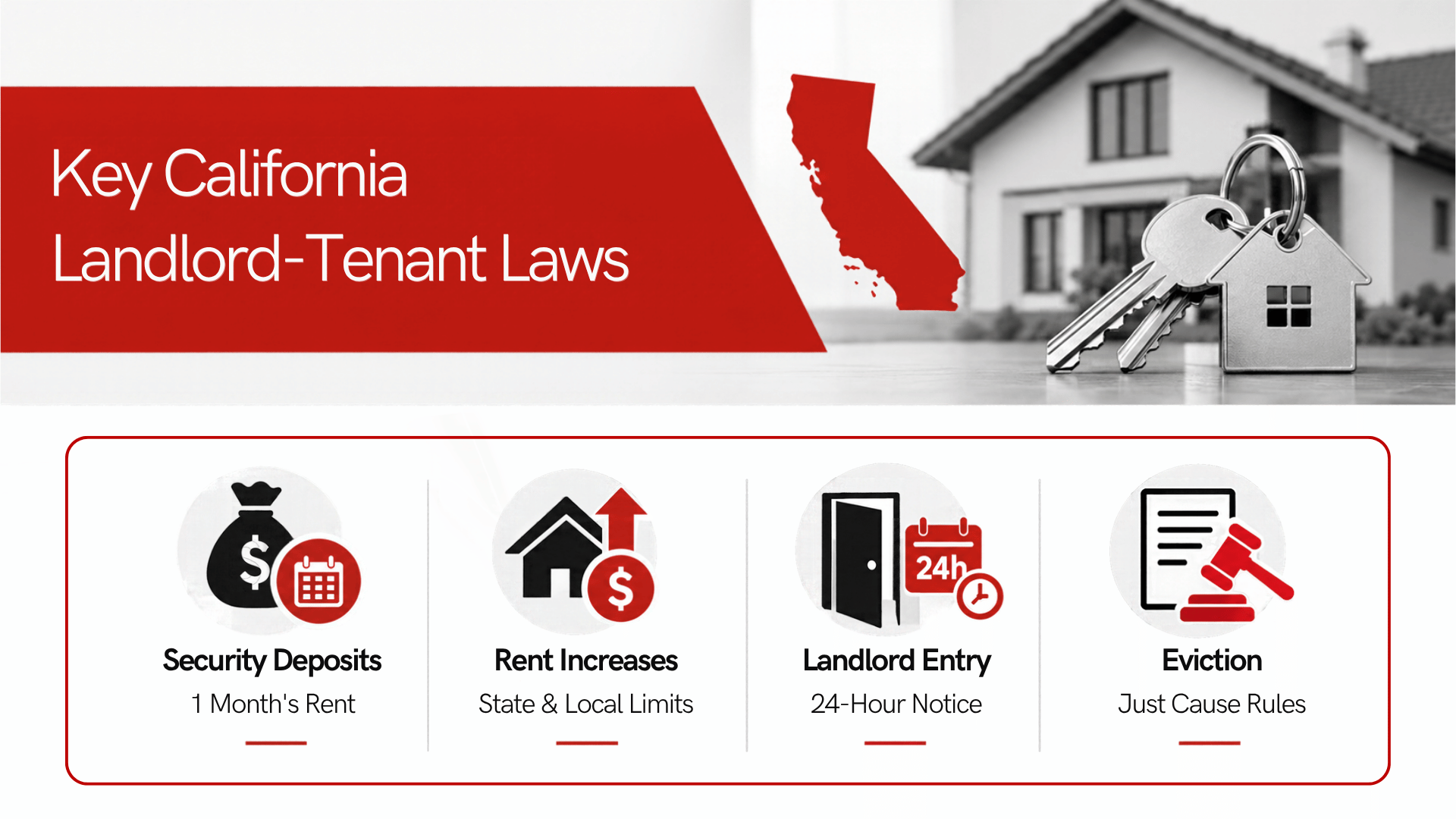
California’s tenant protections are among the strongest in the country. Legal compliance starts before a tenant moves in, and rental laws here cover everything from deposit limits to eviction procedures. As a landlord, knowing them is your responsibility, not your property manager’s, not your attorney’s on move-in day.
Security Deposits
Under California Civil Code Section 1950.5, security deposits for unfurnished residential rentals are capped at one month’s rent as of July 1, 2024 (changed from two months by SB 567). You must return the deposit, along with an itemized statement of any deductions, within 21 days of the tenant’s move-out date.
Rent Increase Limits
AB 1482, the California Tenant Protection Act, limits annual rent increases to 5% plus local CPI (or 10%, whichever is lower) for most residential properties. Single-family homes are exempt if the owner provides proper written notice, and properties built within the last 15 years are also exempt. Local rules in some cities impose stricter caps than state law, so check your municipality’s local ordinances before setting your annual increase. Verify whether your property qualifies for an exemption before assuming you have unlimited pricing flexibility.
Landlord Entry
California Civil Code Section 1954 requires landlords to provide at least 24 hours’ written notice before entering a rental unit, except in genuine emergencies. Unannounced entries are a violation of tenant privacy rights and can expose you to legal liability.
Eviction
After 12 months of tenancy, California landlords subject to AB 1482 must have just cause to terminate a lease. Just cause includes nonpayment of rent, lease violations, and owner move-in situations, but each category has specific eviction rules and procedural requirements. The eviction process in California is formal; self-help evictions (changing locks, removing personal belongings) are illegal. New landlords who skip the procedural steps often end up restarting the process from zero, adding weeks to an already slow timeline.

Should You Self-Manage or Hire a Property Management Company?
The right call comes down to three things: how close you live to the property, how much time you have, and how comfortable you are navigating California landlord law on your own. Here is what each path actually looks like:
Self-Managing
- No management fees, keeping more of your monthly rental income
- You handle all tenant communication, maintenance requests, and lease renewals directly
- Being a responsive landlord matters: slow responses to maintenance responsibilities erode tenant trust and can create legal exposure
- Works best when you live near the property and have time to stay on top of state law requirements
- Best fit for owners with a single property nearby and a hands-on approach
Hiring a Property Management Company
- Typically costs 8 to 12 percent of monthly rent, plus a leasing fee of one-half to one month’s rent per new placement
- A professional property manager handles day-to-day operations: collecting rent, coordinating repairs, resolving tenant disputes, and keeping leases compliant
- What a professional manager handles goes beyond just paperwork: they field maintenance calls, screen prospective tenants, and enforce lease terms so you don’t have to
- Reduces risk for owners who live out of the area or manage multiple units
- Worth considering if you own property in Concord or Danville while based elsewhere
How Does Renting Out Your House Affect Your Taxes?
Rental income is taxable at both the federal and California state level. You report it on IRS Schedule E. The upside: the tax benefits of owning a rental property are real, and most of what you spend managing the property can be written off.
Deductible expenses include mortgage interest, property taxes, insurance premiums, maintenance and repairs, property management fees, and professional services such as accounting or legal fees. You can also depreciate the structure itself over 27.5 years under IRS rules, which reduces your pre-tax income without reducing actual cash flow.
What Happens When You Sell a Rental Property?
Note: If you eventually sell a property you have been renting out, the IRS requires you to “recapture” the depreciation deductions you claimed over the years, which increases your taxable gain. The longer you hold the property and the more it appreciates, the larger that recapture figure can be. That is not a reason to avoid depreciation, but it is something to plan for.
Homeowners in Contra Costa County who are weighing a future sale should review the cost of selling a house in California and understand how California’s supplemental property tax rules interact with ownership changes. The Prop 19 property tax transfer rules also apply if you plan to purchase another primary residence after renting out your current one.
Consult a licensed CPA or tax advisor with California rental experience before filing. Tax situations vary based on income, property type, and how long you have owned the home.
Is Renting Out Your House in California Worth It?
Renting out your house in California is a real wealth-building move when you go in prepared. California’s landlord rules are detailed, but none of them are a surprise when you know them going in. Price the property right, attract responsible tenants through a consistent screening process, write a solid lease, and stay on top of your legal obligations. Those habits are what separate landlords who build equity from those who burn through it dealing with avoidable problems.
Homeowners in Walnut Creek, Concord, and other parts of Contra Costa County are in a strong position. Demand for quality rentals in this region stays steady, and the Walnut Creek housing market forecast points to continued appreciation, meaning your asset grows even while it generates reliable income.
How Can the Renée White Team Help You Decide Whether to Rent or Sell?
If you’re weighing a rental strategy against a sale, the decision comes down to numbers specific to your property, your timeline, and the current market in your neighborhood. The Renée White Team has closed over 1,600 transactions across Contra Costa County and can help you with:
- Rental vs. sale analysis: Comparing projected rental income against your net proceeds from a sale, using current market data for your specific neighborhood
- Pricing guidance: Identifying what your property would realistically rent for today, based on active comps in Walnut Creek, Concord, and surrounding cities
- Timing strategy: Advising on whether current market conditions favor holding as a rental or selling now to maximize equity
- Referrals to vetted professionals: Connecting you with local property managers, CPAs, and real estate attorneys who specialize in California landlord situations
Whether you ultimately decide to rent, sell, or hold, having the right guidance before you commit saves time, reduces risk, and protects your equity. Reach out to the Renée White Team for a no-pressure conversation about what makes the most financial sense for your home.